Hijama for Kitchener-Waterloo.
Looking for Hijama near Kitchener? Rose Cupping Therapy welcomes clients from Kitchener, Waterloo, Cambridge and surrounding communities to our London, Ontario clinic for traditional wet cupping / Hijama.
Treatment is provided by Anwar Iraki, whose practitioner profile reflects more than 36 years of experience with cupping.
Serving the Tri-City area from London.
Rose Cupping Therapy is physically located in London, Ontario. We welcome clients who travel from Kitchener, Waterloo and Cambridge for traditional wet cupping / Hijama.
This page helps Kitchener-Waterloo residents looking for a dedicated cupping practice find Rose Cupping Therapy while keeping the actual clinic location clear.
Contact the clinic before travelling to confirm appointment availability and discuss whether wet cupping or dry cupping is the type of service you are considering.
All Rose Cupping Therapy appointments take place at 912 Guildwood Blvd, London, Ontario N6H 5S9.
What does traditional wet cupping involve?
Hijama combines controlled suction with superficial openings in the skin.
Controlled negative pressure.
Cups are positioned on appropriate treatment areas and suction draws the skin upward into the cup.
Superficial skin openings.
Wet cupping involves controlled, superficial openings so a small amount of blood can enter the cup.
Additional skin care afterward.
Because wet cupping intentionally opens the skin, hygiene and treatment-area aftercare are particularly important.
For Tri-City residents looking specifically for Hijama.
Our regional page helps people throughout Waterloo Region find our dedicated London cupping clinic without suggesting that we operate a local branch in Kitchener.
Hijama near Kitchener
Kitchener residents can contact Rose Cupping Therapy to discuss traditional wet cupping and confirm appointment availability before travelling.
Serving Waterloo-area clients
Waterloo residents looking for Hijama are also welcome to arrange treatment at our London clinic.
Regional wet cupping access
Clients from Cambridge may contact the clinic before making the trip to London for wet or dry cupping.
One actual treatment location
These regional pages make Rose Cupping Therapy easier to find, while every treatment continues to take place at our London clinic.
Respecting Hijama without making unsupported promises.
Cupping has been studied for pain and other health concerns, but much of the available research is low quality.
Some evidence suggests cupping may help reduce pain, but the evidence is not strong enough to guarantee benefit.
Wet cupping should therefore be approached as a traditional and complementary practice, not as a guaranteed cure for disease.
Blood is not automatically “toxins.”
Wet cupping removes a small amount of blood, but that does not establish that unspecified toxins or “stagnant blood” are being removed.
Possible benefit, not guaranteed relief.
Research has explored cupping for pain, but study quality and consistency limit how confidently an outcome can be predicted.
No accelerated-healing guarantee.
Hijama should not be described as a proven method for accelerating tissue repair or curing an underlying condition.
Medical care still matters.
Wet cupping should not replace diagnosis, prescribed medication, rehabilitation, surgery or another appropriate treatment.
What Kitchener-Waterloo clients can expect.
Confirm your appointment before travelling and share relevant health information before wet cupping begins.
Confirm availability
Call or contact the clinic before travelling from Kitchener-Waterloo.
Discuss health information
Tell your practitioner about medications, pregnancy, skin concerns, bleeding issues and relevant conditions.
Controlled wet cupping
When appropriate, suction and the superficial wet-cupping technique are performed on selected treatment areas.
Know what happens next
Temporary marks, treatment-area care and relevant aftercare are discussed before you leave.
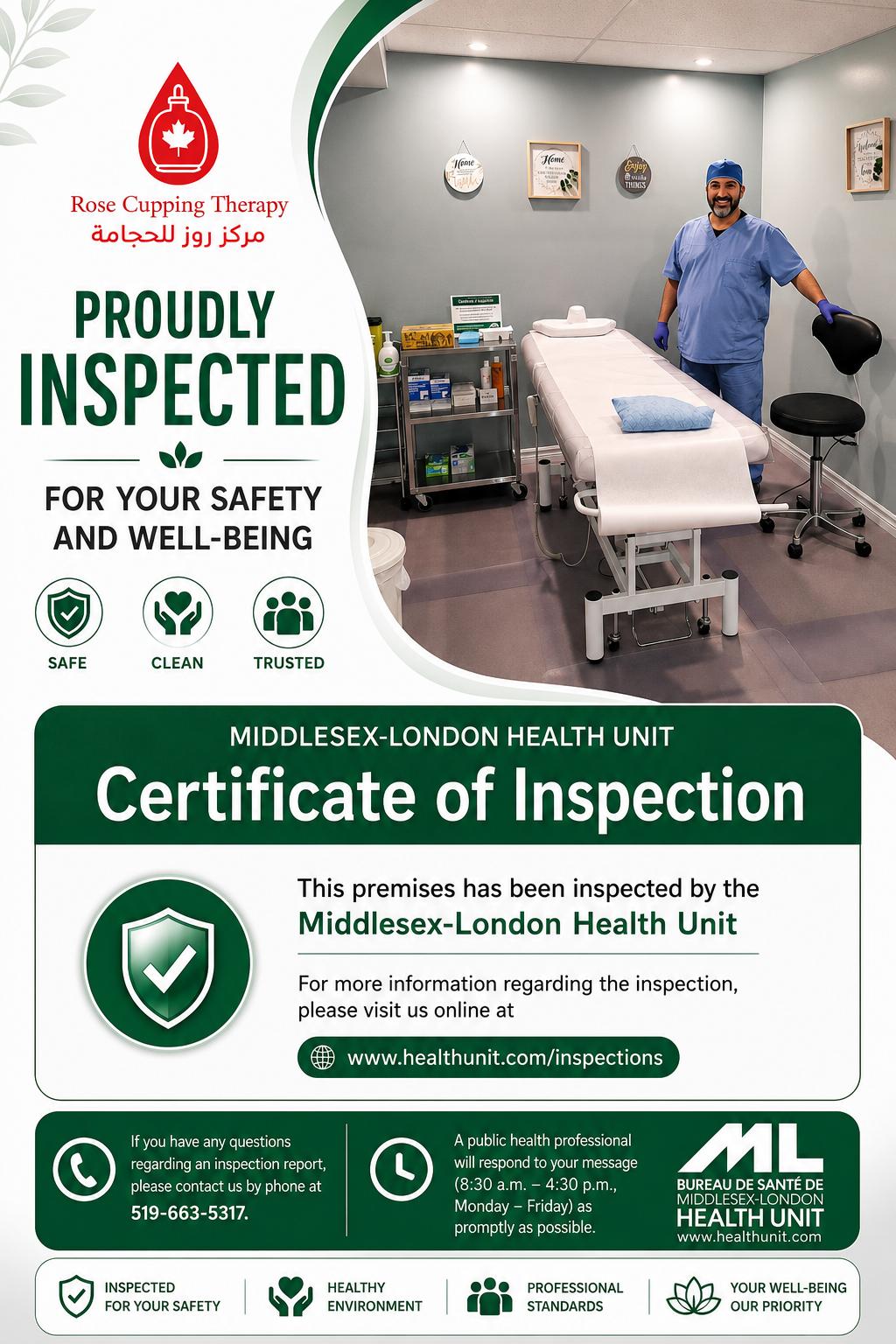
Blood-contact procedures require careful hygiene.
Wet cupping differs from dry cupping because the skin is intentionally opened and blood is involved. Infection-control procedures are therefore particularly important.
More than 36 years of cupping experience.
Anwar Iraki provides traditional wet cupping / Hijama and dry cupping at Rose Cupping Therapy in London, Ontario.
His practitioner profile reflects more than 36 years of experience working specifically with cupping techniques.
Experience relates to cupping practice and technique. It does not replace medical diagnosis or guarantee individual outcomes.
Hijama isn't appropriate for everyone.
Because wet cupping intentionally opens the skin and involves blood, relevant health information should be discussed before treatment.
Bleeding or clotting concerns
Tell your practitioner about bleeding disorders, clotting problems, anemia or anything affecting normal bleeding.
Anticoagulant or antiplatelet medication
Medication affecting bleeding or bruising should be disclosed before wet cupping is considered.
Pregnancy
Tell your practitioner if you are pregnant. Complementary treatments should be considered alongside appropriate pregnancy care.
Skin conditions
Wet cupping should not simply be performed through active infection, open wounds or significantly irritated skin. Cupping may also aggravate eczema or psoriasis.
Questions from Kitchener-Waterloo clients.
Clear information before travelling to Rose Cupping Therapy in London.
Do you have a Hijama clinic in Kitchener?
No. Rose Cupping Therapy is physically located in London, Ontario. We welcome clients who travel from Kitchener, Waterloo, Cambridge and surrounding communities.
What is Hijama?
Hijama is a traditional form of wet cupping that combines suction with controlled superficial openings in the skin so a small amount of blood can enter the cup.
Is Hijama different from dry cupping?
Yes. Dry cupping uses suction without intentionally opening the skin. Wet cupping / Hijama involves superficial skin openings and therefore has additional bleeding and hygiene considerations.
Does Hijama remove toxins?
Wet cupping removes a small amount of blood, but this should not automatically be described as extracting unspecified toxins or stagnant blood from the body.
Can Hijama help with pain?
Cupping has been researched for pain and some studies report improvement, but the overall evidence is not strong enough to guarantee relief for an individual client.
Should I stop blood thinners before Hijama?
Do not stop or change prescription medication for a cupping appointment unless the healthcare professional who prescribed it has instructed you to do so. Tell the clinic about anticoagulant or antiplatelet medication before treatment.
Does Hijama leave marks?
Temporary circular redness, discoloration, tenderness or bruising may occur after suction. Wet cupping also involves superficial skin openings that require appropriate aftercare.
Who performs Hijama at Rose Cupping Therapy?
Anwar Iraki provides wet and dry cupping at Rose Cupping Therapy. His practitioner profile reflects more than 36 years of cupping experience.
How do I book from Kitchener?
Call Rose Cupping Therapy at (519) 601-7678 or use our contact page to confirm appointment availability before travelling to London.
Looking for professional Hijama near Kitchener?
Kitchener, Waterloo and Cambridge residents are welcome to book traditional wet cupping / Hijama at Rose Cupping Therapy's London clinic.
Our approach emphasizes experienced technique, transparent information, careful hygiene and realistic expectations.
Contact us before travelling so we can confirm availability and answer practical questions about your appointment.
Book From KitchenerExplore Hijama before travelling from Kitchener.
Learn more about wet cupping, dry cupping, clinic safety and your practitioner.
Ready to arrange your Hijama appointment?
Contact Rose Cupping Therapy before travelling from Kitchener, Waterloo or Cambridge to confirm availability and discuss wet cupping with our London clinic.